Tag: TSA Philosophy

TSA Architects 2017 Team Picture

It’s All About Love

People who truly “love” what they do – waking up excited to come to work, confident that they are making changes in the world and creating a better place for humanity day in and day out. These are the kind of people who comprise our team. We are privileged to count ourselves among those who are not only passionate about what we do, but are incredibly fulfilled by our work as well… and this isn’t limited strictly to business hours. Architects have been known to wake up in the middle of the night with “the” idea, and immediately get up to put it on paper (in fair detail, too). If that isn’t love, we don’t know what is! And with Valentines day just around the corner, what better time than to share the reasons we love our work with the world? Here’s some thoughts from our team:

Jessica, our Office Manager:  I love that good and thoughtful design can transform your mood from bad or blah to WOW or aaaahhh (that unintentionally rhymed and I feel like Dr. Suess all of a sudden!).  It can affect our minds and the way we are feeling!  Good design is good for the soul.

Stephanie, Interior Designer:  One thing I love about design is that solving people’s problems is rewarding. We do research, kick off meetings, all these things are to make sure we are solving the right problems for the specific audience. We are not only creating a beautiful space, but also helping people make smarter decisions. And you get to see people interact with your work – seeing your work in action on a daily basic can be both gratifying and motivating.

Doug, Principal:  I love that architecture can simultaneously give shelter, facilitate economy, and shape emotional response. Architecture, in its best expressions, delights the human spirit.

Rachel, Associate:  What I love about Architecture is the moment we finish construction and the owner takes the building and moves in and it makes it their own.  I feel satisfaction when the job is complete and our clients take our design and make it their “home”.

Nathan, Design Principal:  I love architecture and design because it is speaks to having a hand in creation—taking rough matter, ideas, problems, visions and making out of them something beautiful, fulfilling, and life-enhancing.  It is exhilarating to have a little hand in what God does.

Cali, Marketing Manager: I love architecture because the entire process is so human-centric – every building is the product of an incredible amount of thoughtfulness and affects so many facets of our experience, sometimes without us even knowing. The dedication and creativity on both the client’s and design team’s parts is so inspiring (especially to someone like me who routinely thinks inside-the-box).


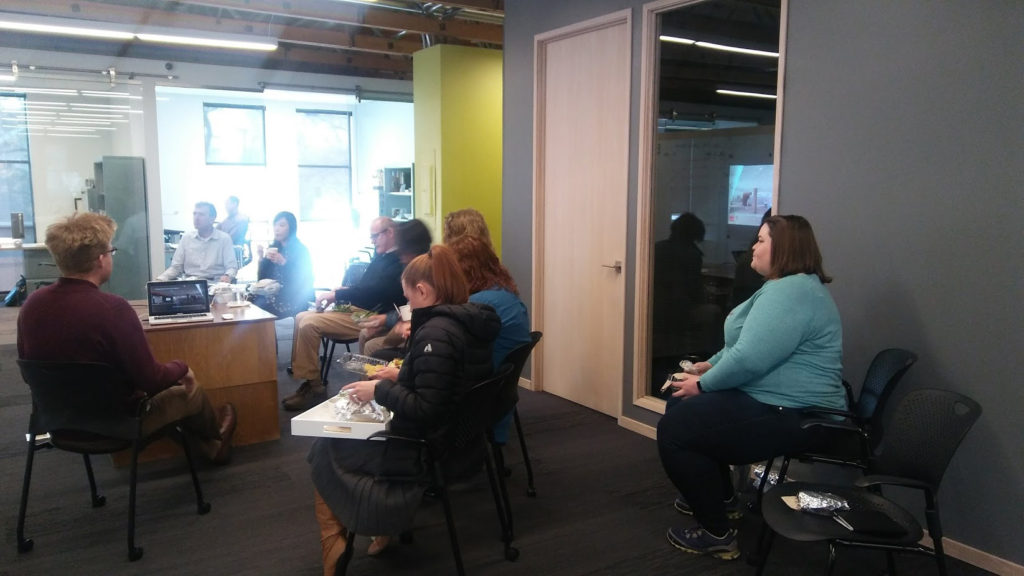
TSA Architects Utah Healthcare Architects Team Meeting

TSA Design Vanguard

In an effort to develop a strong team culture, engage discussion, and continually improve in all facets of our work, our firm has implemented an internal program entitled ASSET. In ASSET luncheons, we discuss a range of topics, develop protocols and procedures, and further refine our mission and determine how best to evidence that mission in all that we do.

Today’s ASSET Luncheon topic was the TSA Design Vanguard.

Our mission statement is “Making Place for the Human Spirit” – and we took a deep look at how we are currently executing that belief. What are we doing well? Where could we improve?

From the outside looking in, a common misconception is that architecture simply refers to a building’s exterior. What some perceive as simply a striking or good-looking structure goes so much deeper than just the immediate aesthetic upon entering the parking lot.

Good design is at its best when it is facilitating rather than obstructing an experience – a provider is able to easily and efficiently access every tool and material needed to perform their functions seamlessly. A patient feels comfortable, at ease, and at home in their exam space. An organization’s purpose and vision is not just evident in the staff’s demeanor, but permeates the entire physical environment. When a project enables all of these things and is also beautiful to experience – that is good design.


At the very core of our process is working with individuals representing our clients at every available level: C-Suite, Management, Facilities, Donors, Providers, and Patients. It’s so important for us to have a clear understanding of not only our client’s vision and organizational culture, but also the unique needs of each person who is an extension or patron of the facility. A doctor, a facilities manager, a patient, and a CEO will all interact very differently with the space and our goal is to create a solution that not only addresses those needs but also strives to fulfill the organization’s mission and elevate the patient experience too. We also recognize that each project’s goals and primary functions necessitate different and original solutions. We enjoy finding ways to meet each client where they are and work together as we help them reach their “next level.”

After some great discussion, we came away with both reinforced commitment to the excellent work we do and new ideas of how to shine as a team in the year to come.

Sketchaholics Anonymous: Preserving the Art of Hand Rendering

In an increasingly digital world, computer aided design – or CAD – is quickly becoming the most widely utilized tool for communicating architectural and design concepts to clients. While it is certainly powerful and precise in communicating developed design, CAD lacks a few key benefits that preserve hand-rendering’s place as a necessary skill in today’s world.

Unfortunately, with the ubiquity of CAD hand-rendering is becoming less prevalent and receives less emphasis throughout an architect’s education despite its usefulness. In an effort to combat this and preserve the art of putting pen and pencil to paper in the up-and-coming generation of architects, our design principal Nathan hosts a monthly class (affectionately referred to as “sketchaholics anonymous” among our team), focusing on different techniques and applications and with a variety of subjects.

Why is hand-rendering a critical skill?

At the core of our mission is jointly creating architecture that facilitates meaningful experiences, inspiring the human spirit to flourish and thrive. To do so, we delve deep into our client’s vision – drawing out not only the necessary functions of the space but also aspirational goals – the “if it were possibles” and the “it would be really cool ifs” – from each stakeholder.


As we do so, we sketch on the table right there with the client, a concept materializing for everyone to see, understand, provide feedback. It creates a truly iterative process and open dialogue. There is no lag time, no coming back in a few weeks with a digital rendering of what we hoped was communicated previously. This creates a true partnership with each client and stakeholder, giving them a front-row seat to the creative process from inception to completion.